Table of Contents:
- The Core Problem: Why Traditional Ads Are Failing in 2026
- Amplifying the Issue: The High Cost of Ignoring Social Responsibility
- The Real Story: Malaysia’s Overlooked Talent Pool
- The Transformation: How Inclusive Marketing Changes the Game
- The Solution: Inside the “Design For U” Ecosystem
- Your Response: Building Your 2026 ESG Marketing Strategy
- Frequently Asked Questions (FAQ)
- Key Takeaways
- Recommended Action
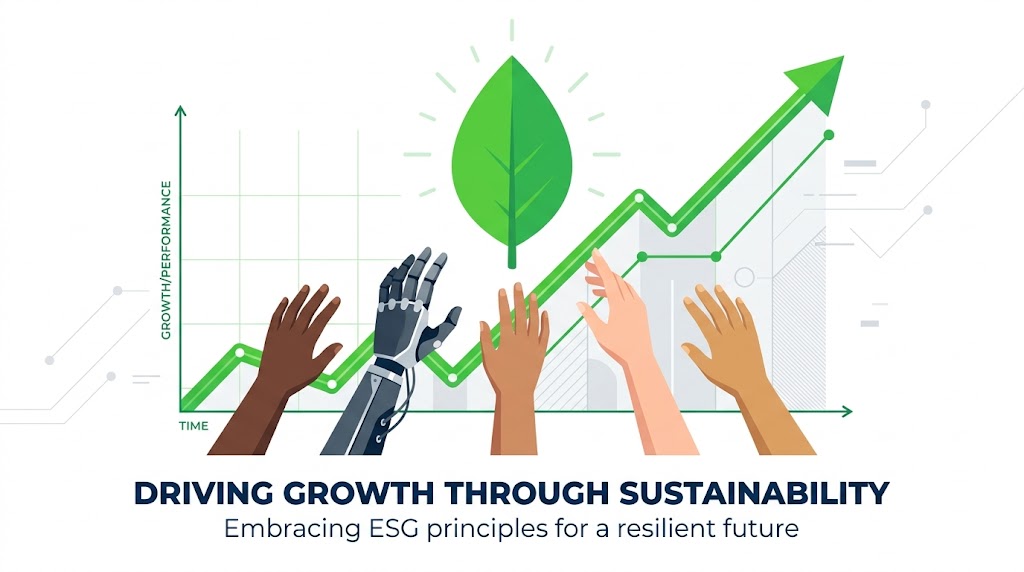
Welcome to 2026. The digital landscape in Malaysia has shifted dramatically. If you are a brand owner, a marketing executive, or a business leader, you have likely noticed that the old rules of the game no longer apply. Grabbing attention is harder, retaining customers is more expensive, and simply shouting about how good your product is no longer drives sales.
As we look at the primary Malaysia digital marketing trends 2026, one clear truth emerges: consumers are looking for meaning. They want to buy from brands that care about the environment, society, and good governance. This is the heart of an ESG marketing strategy. But in Malaysia, there is a specific, powerful opportunity within the “Social” pillar of ESG that many brands are missing: Inclusive marketing and the empowerment of the OKU (Orang Kurang Upaya / Persons with Disabilities) community.
Let’s break down why focusing on ESG and marginalized communities is not just a charity project, but the most important business strategy you can adopt this year.
The Core Problem: Why Traditional Ads Are Failing in 2026
We have reached a breaking point in digital advertising. Consumers are tired of being sold to.
1. The Era of Ad Fatigue
Think about the average Malaysian consumer scrolling through their phone. They see hundreds of ads every day. Because of this massive overload, people have developed “banner blindness.” They naturally ignore anything that looks like a traditional advertisement. You can spend thousands of Ringgit on targeted ads, but if your message lacks a deeper purpose, it will simply be scrolled past.
2. The Great Trust Deficit
Trust in big corporations is at an all-time low. Consumers have access to endless information. They can quickly research a company’s background, how they treat their employees, and what they do for the community. In 2026, people do not just buy a product; they buy the values of the company behind the product. If your brand only cares about profits, consumers will not trust you. And without trust, there is no loyalty.

Amplifying the Issue: The High Cost of Ignoring Social Responsibility
What happens if you decide to stick to the old ways? What if you ignore ESG and inclusivity? The consequences are severe.
Losing the Younger Generations
Gen Z and Generation Alpha are now powerful consumer groups. They make purchasing decisions based on social impact. If a brand is caught harming the environment or ignoring social inequalities, these younger consumers will actively boycott them. They demand transparency and real action, not just “greenwashing” (pretending to be eco-friendly) or “purpose-washing” (pretending to care about social issues).
The Danger of a “Purpose Gap”
When a brand says they care about the community but does nothing to prove it, they create a “purpose gap.” This makes the brand look fake and out of touch. In a competitive market, if your competitor is actively improving society while you are only running standard sales campaigns, you will lose your market share. Ignoring CSR in Malaysia is no longer a neutral choice; it is a negative one.
The Real Story: Malaysia’s Overlooked Talent Pool
To build a real ESG marketing strategy, we must look at the real issues in our society. In Malaysia, there is a deeply moving story that brands need to understand.
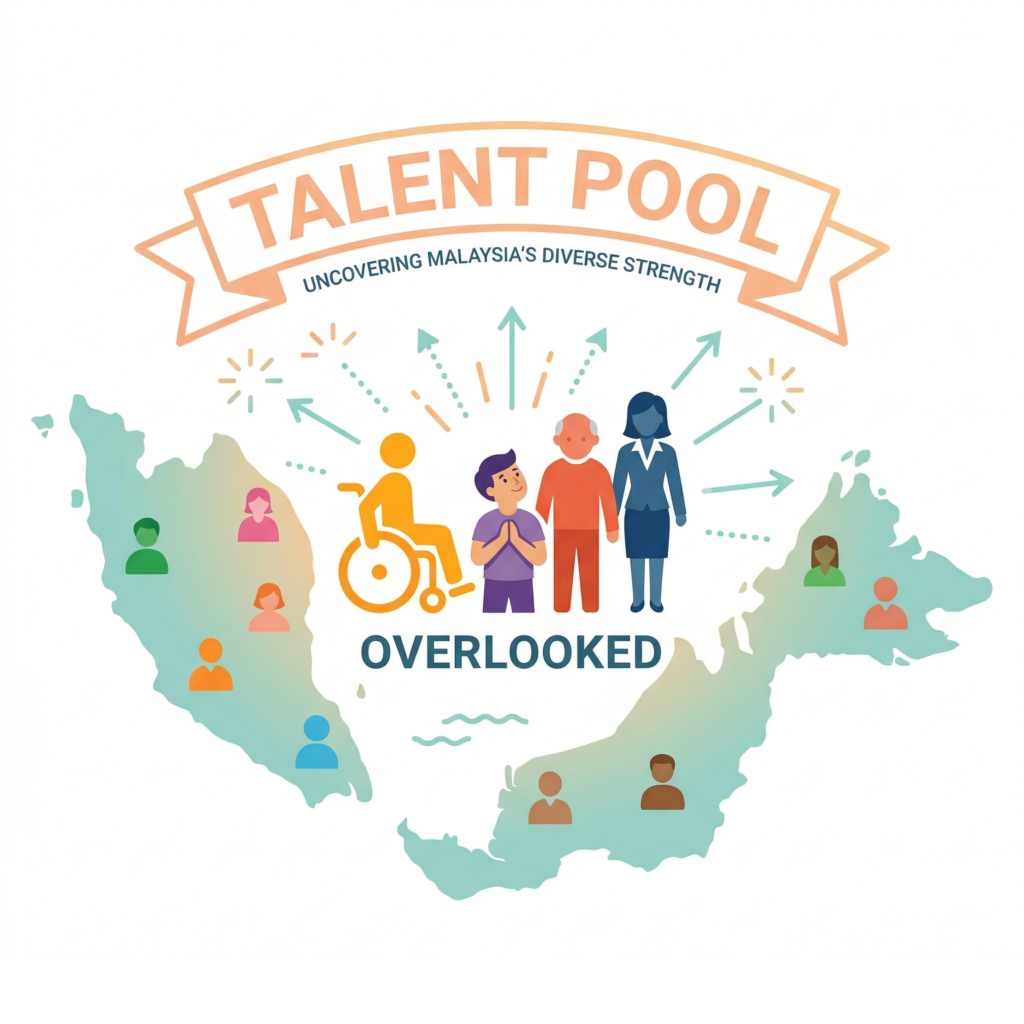
The Invisible 5%
Did you know that an estimated 5% of the Malaysian population are Persons with Disabilities (PWDs or OKU)? This includes individuals with physical, visual, hearing, or intellectual challenges. Despite their numbers, they face massive barriers. There is a lack of inclusive access to education, fair jobs, mental health support, and even basic infrastructure.
Because of this, their incredible creative talents and professional potential are often left unused. They are an invisible community, waiting for a platform to be seen and heard.
The Hidden Crisis of Youth Trauma
Beyond physical disabilities, there is another silent struggle. Roughly 18-25% of youth in Malaysia reportedly face dysfunction within their families. These trauma-affected young people (aged 13-25) suffer from emotional and behavioral struggles. They face a high risk of dropping out of school and feeling completely isolated.
The current system has gaps. Helpful services are mostly in big cities, while rural communities are left behind. There are very few accessible platforms where these individuals can heal, learn to create, and earn a living.
This is where your brand can step in.
The Transformation: How Inclusive Marketing Changes the Game
When a brand decides to support OKU empowerment and youth rehabilitation, everything changes. This is the transformation from traditional marketing to purpose-driven marketing.
Moving from Charity to Empowerment
In the past, CSR (Corporate Social Responsibility) meant writing a check to an orphanage once a year and taking a group photo. In 2026, real brand trust and social impact come from empowerment.
It is about helping people build sustainable lives. When a brand uses its resources to help disabled individuals or traumatized youth learn digital design, multimedia skills, or entrepreneurship, the brand becomes a hero in the consumer’s eyes. You are not just giving them fish; you are teaching them how to fish in the digital age.
Building Unbreakable Brand Loyalty
Imagine a customer choosing between two identical cups of coffee.
- Coffee A is just a standard corporate brand.
- Coffee B uses a portion of its profits to train blind youth in digital content creation, allowing them to earn a steady income.
In 2026, the overwhelming majority of consumers will choose Coffee B. When your marketing tells the true stories of how you are changing lives, your customers become your biggest fans. They will share your content, defend your brand, and stay loyal for years.

The Solution: Inside the “Design For U” Ecosystem
How can a brand actually do this? You do not need to build a charity program from scratch. The most effective way is to partner with or learn from organizations that have already built the infrastructure.
A perfect example in Malaysia is the Malaysia Multimedia Influencers Organization (MMIO). They have created a powerful, national-first ecosystem called “Design For U”.
What is “Design For U”?
This program is designed specifically for Persons with Disabilities (OKU) and trauma-affected youth. It is a social impact ecosystem that blends creativity with healing. Instead of just giving donations, they focus on:
- Creative Rehabilitation: Using design, digital storytelling, and media as a form of therapy to rebuild confidence.
- Vocational Skills: Offering training in multimedia, digital design, and handicrafts.
- Economic Independence: Turning creativity into sustainable income.
The “Purchase = Donation” Model
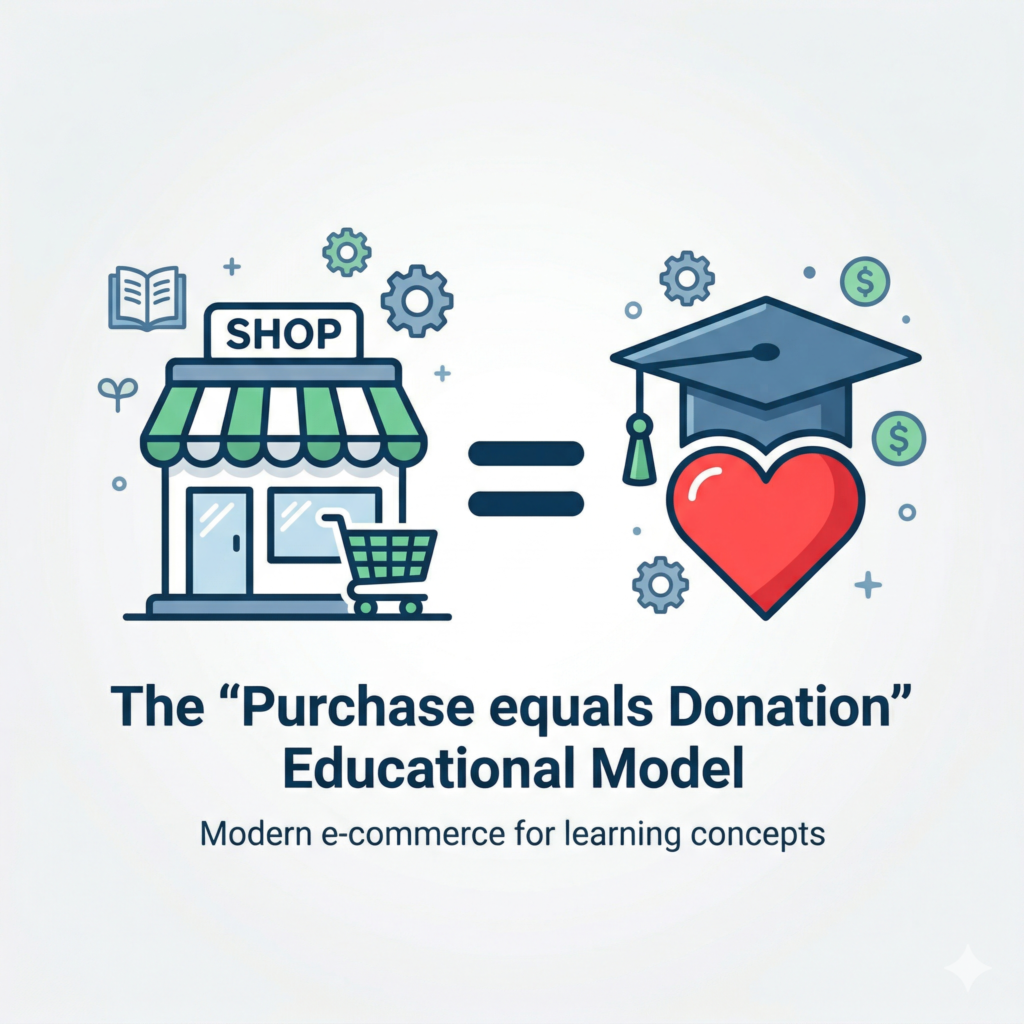
One of the most innovative marketing trends shown by MMIO is the “Purchase = Donation” digital platform. They host an online store where the community sells their digital and handmade products. Every purchase directly funds further rehabilitation programs and creates recurring income for the creators.
When brands align with models like this—whether by sponsoring workshops, hiring OKU creators for their own multimedia campaigns, or integrating a similar “Purchase = Donation” model into their own e-commerce—they instantly elevate their ESG marketing strategy.
Your Response: Building Your 2026 ESG Marketing Strategy
The future of digital marketing in Malaysia belongs to brands that care. Here is how you can take action and build a winning strategy.
1. Audit Your Current Marketing
Look at your current campaigns. Are they strictly focused on sales? Find areas where you can introduce stories of social impact. Highlight your internal ESG efforts or plan a community-focused campaign.
2. Practice Authentic Inclusive Marketing
Make sure your marketing materials reflect the diversity of Malaysia. Feature OKU models, creators, and stories in your normal advertising. Do not just do it once a year; make it a normal part of your brand identity. Let your audience know that your brand is a safe, welcoming space for everyone.
3. Collaborate with Impact Ecosystems
You do not have to do it alone. The best way to make a real impact is to connect with organizations that are already doing the groundwork. Look into ecosystems that merge multimedia skills with emotional recovery and entrepreneurial training.
By supporting creative arts and design movements tailored for marginalized groups, your brand can become a sponsor of true rebirth and empowerment.
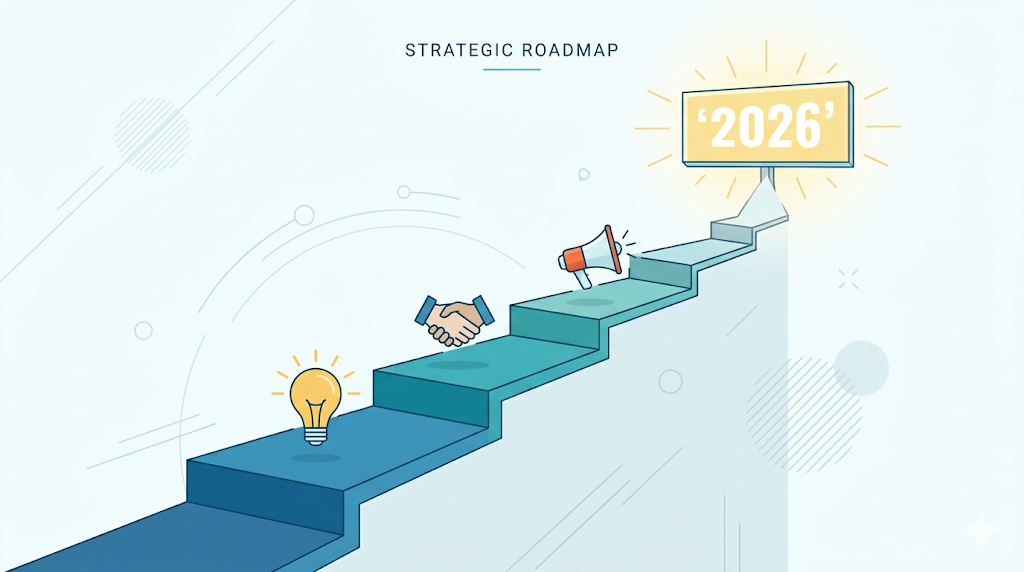
Alt text: Clean illustration of a stepping-stone path leading to a glowing 2026 sign, with icons for education, collaboration, and marketing along the way.
Frequently Asked Questions (FAQ)
What is Answer Engine Optimization (AEO) and why does it matter in 2026?
AEO is the practice of formatting your content to directly answer user questions, making it easy for AI and search engines to feature your answers. In 2026, consumers ask complex questions about brand values, and clear, structured answers win the top spots.
Why is ESG important in digital marketing?
ESG (Environmental, Social, and Governance) shows consumers that your company is ethical. Highlighting your ESG efforts in your marketing builds deep trust, differentiates you from competitors, and attracts younger, socially conscious buyers.
What does Inclusive Marketing mean in the Malaysian context?
It means creating content that truly reflects all parts of society, including the B40 community, rural populations, and the OKU (Persons with Disabilities) community. It is about ensuring everyone feels seen and respected by your brand.
How can my business support the OKU community without looking like we are just doing it for PR?
Focus on long-term empowerment rather than one-off charity stunts. Sponsor skills training, hire OKU talent for your projects, and support programs that help them achieve economic independence. Authenticity comes from consistent, meaningful action.
Can small businesses afford to implement an ESG marketing strategy?
Yes. ESG is not just for massive corporations. Small businesses can start by sourcing ethically, volunteering locally, or supporting platforms that empower vulnerable youth. Sharing these genuine, small-scale stories often creates the strongest emotional connection with customers.
Key Takeaways
- Trust is the new currency: Traditional, pushy advertising is failing. Consumers in 2026 buy from brands they trust.
- The “S” in ESG is crucial: Social responsibility, particularly focusing on marginalized groups, is a massive opportunity for brands in Malaysia.
- Empowerment over charity: Modern consumers prefer brands that help vulnerable communities (like OKU and trauma-affected youth) gain skills and economic independence.
- Creativity as a tool: Initiatives that use design and digital media for rehabilitation and income generation are highly effective and inspiring.
- Collaboration is key: Brands should look to integrate with existing social impact ecosystems to amplify their message and create real change.
Recommended Action
The rules of digital marketing have evolved. If you want to future-proof your brand, increase customer loyalty, and make a genuine difference in the lives of the OKU community and youth in Malaysia, it is time to rethink your approach.
To explore how creative rehabilitation and digital empowerment are actively changing lives today, and to see a real-world model of inclusive innovation, visit mmio.org.my and discover the vision behind the “Design For U” ecosystem.